Justice Still Out Of Reach For Many Nigerians — Zarephath Aid Tells Judiciary At New Legal Year Conference
Kemisola Oye
LAGOS, Nigeria — As Nigeria’s judiciary across federal and state levels marked the commencement of the 2025/2026 legal year with pomp and ceremony, Zarephath Aid, a non-governmental organisation focused on criminal justice reform, has called for urgent reforms to address what it described as the “lingering justice questions” affecting millions of Nigerians.
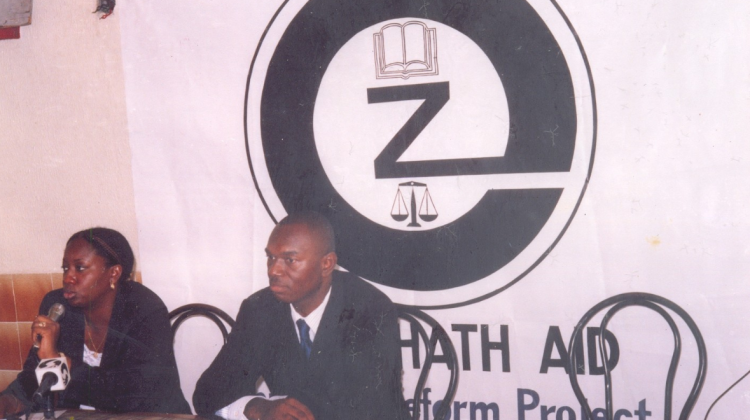
Speaking at a media conference themed “The New Legal Year and the Lingering Justice Questions” held on Tuesday at the Press Centre of the Ikeja High Court in Lagos, the Founder of Zarephath Aid, Ben Abraham, Esq, urged the judiciary to translate speeches and ceremonial celebrations into tangible actions that bring justice closer to the common man.
Abraham noted that while judges and legal practitioners across the country celebrate the new legal year with speeches and processions, many ordinary Nigerians “fail to relate with the significance of these ceremonies because, for them, justice is beyond long speeches.”
“They eagerly await the day when they can touch justice — or put differently, the day justice can touch them,” he said. “When that day comes, the inaugural legal year pomp would strike a chord of meaning in their hearts.”
The organisation highlighted several areas where the Nigerian justice system is failing citizens and offered concrete recommendations for reform.
1. Strengthening Oversight in Detention Centres
Zarephath Aid expressed concern over the lack of judicial oversight of law enforcement detention facilities, a responsibility clearly outlined under the Administration of Criminal Justice Act (ACJA) 2015. The group lamented that in many states, judges and magistrates neglect the legal requirement to conduct monthly visits to police cells and detention centres.
“The result has been the illegal detention of persons and rampant abuse of suspects’ rights,” Abraham said. He urged Chief Judges and Attorneys-General to ensure compliance with the oversight provisions to curb the excesses of law enforcement agencies.
2. Weak Enforcement of the Child Rights Act
The NGO decried the poor implementation of the Child Rights Act across several states, describing the situation as “a silent crisis” in Nigeria’s justice system.
According to Zarephath Aid, many states lack adequate facilities to hold underage offenders, resulting in children being detained alongside adults — a practice that exposes minors to abuse and trauma.
“Children have come under society’s negativity without the law safeguarding them,” Abraham lamented. “In some cases, logistics to transport underage suspects to court do not exist, forcing relatives to pay from their pockets.”
3. Rising Police Brutality and Shrinking Civic Space
The organisation raised alarm over increasing reports of police brutality, extortion, and torture of citizens, calling it a threat to Nigeria’s democracy.
“The internal disciplinary mechanisms of the Nigeria Police Force have failed,” Zarephath Aid said. “If the courts do not leash this errancy, another uprising will be upon us sooner than later.”
The group accused some police officers of working as “tools of intimidation” for the executive arm of government, targeting activists, journalists, and critics under the guise of enforcing law and order.
4. Prison Congestion and Slow Justice
Despite various interventions by NGOs and the judiciary, the group noted that Nigeria’s correctional centres remain dangerously overcrowded, with thousands of inmates languishing in jail for years without trial.
Zarephath Aid called for a comprehensive audit of correctional facilities to identify and document inmates’ cases, urging collaboration between state judiciaries and the Administration of Criminal Justice Monitoring Committee (ACJMC).
“We must end this national embarrassment where people spend more time awaiting trial than the maximum sentence for their alleged offenses,” the organisation declared
5. Misuse of the Cybercrimes Act 2024
Zarephath Aid also criticised what it described as the “weaponisation of the Cybercrimes Act 2024” by political actors to silence dissent and stifle free expression.
“We have seen this Act used to muzzle critics and overawe opponents of the government into silence,” Abraham said. “Until our courts stop accommodating politically motivated charges, the Act will remain a tool for harassment rather than justice.”
Call to Action for Judiciary and Media
Concluding the address, Abraham called on judges, lawyers, and media practitioners to move beyond rhetoric and hold the judiciary accountable over the next 12 months.
“We invite the media to join us as we set this agenda for the judiciary and monitor their performance,” he said. “Our democracy can only survive when the courts defend the laws and protect the people without fear or favour.”
Zarephath Aid, founded by Ben Abraham, is a non-governmental, non-political, and non-profit organisation dedicated to criminal justice reform, legal aid, and prisoner rehabilitation.