NGO Demands Prison Audits, Child Rights Protection, Police Accountability
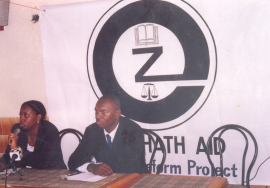
LAGOS – A Lagos-based non-governmental organisation, Zarephath Aid (ZA), has called for urgent reforms in Nigeria’s justice sector, urging the judiciary and government agencies to go beyond speeches and take decisive steps to decongest correctional facilities, enforce child rights, and curb police excesses.
The non-profit organisation, which focuses on legal aid, prisoner welfare, and rehabilitation, made the appeal in Lagos on Friday.
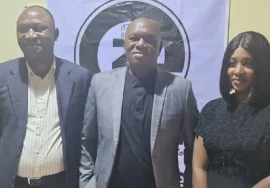
Its leaders, Mr. Ben Abraham (Founder), Joseph Ameh (Executive Director) and Kaylah Abraham, (the Gender Rights and Child Officer) said the current state of correctional facilities and policing in Nigeria poses a direct threat to justice and public safety.
Speaking on the plight of inmates, Mr. Abraham emphasised that a comprehensive audit of all correctional facilities is overdue.
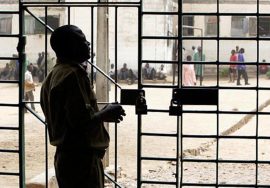
He said, “Correctional centres in this country have become warehouses of forgotten souls. We keep hearing about decongestion, but no one has done the basic work of auditing who is in custody, why they are there, and how long they’ve been awaiting trial.”
He noted that over 70 percent of the prison population are awaiting trial, with many spending five to ten years in detention for petty offences.
“Until we have transparent, digital audits that show how many are convicted, how many are awaiting trial, and how many are due for release, we will only recycle speeches and ignore suffering,” he warned.
Abraham also urged the Minister of Interior to extend his digital reforms to the correctional service. “We are told of modern facilities being built, but where are they? Are they in the cloud or in reality? The minister should turn the torchlight on prisons,” he added.
For Executive Director Joseph Ameh, welfare conditions in correctional centers are a key driver of crime in society.
“We visit these facilities and you see six inmates squeezed into a cell meant for two. Some take turns to sleep. Food is inadequate, sanitation is terrible, and there is little or no medical care. How can you rehabilitate anyone in these conditions?” he asked.
According to him, welfare is not a luxury but a crime prevention strategy. “When an inmate comes out broken, without mental stability, medical care, or skills, that person is more likely to commit crime again. Correction must mean correction, not destruction,” Ameh said.
He called for regular welfare audits of prisons alongside population audits, stressing that the judiciary and the Ministry of Interior must take the lead.
The Gender Rights and Child Officer of ZA, Kaylah, described the treatment of underage offenders as “a national shame.”
“Despite the Child Rights Act, many states do not have facilities to keep minors. What happens is that children are locked up with adults, boys with hardened criminals, girls exposed to abuse. It is unacceptable,” she said.
She revealed that many underage offenders spend months or years in detention without trial because of poor logistics.
“Families are forced to pay bribes just to get their children to court. Some of these children have never seen a lawyer,” she explained.
She urged the judiciary to fast-track all child-related cases, ensure legal aid for minors, and conduct one-on-one audits in juvenile cases.
“When you sit with a child and ask, ‘How long have you been here? Have you seen a lawyer?’ the truth will shock you,” she added.
Zarephath Aid also raised concern over growing reports of police brutality, extortion, and unlawful detention.
“Nigerians are on the receiving end of police abuse daily,” Abraham said. “Torture, arbitrary arrests, and illegal detentions have become routine. This is not policing; it is criminality in uniform.”
Ameh added that the police’s internal disciplinary mechanisms have failed. “We need an independent police oversight body that is free from political or police influence. Otherwise, impunity will continue,” he said.
The group also highlighted the need to retrain Investigating Police Officers (IPOs) in line with Supreme Court rulings on suspect interrogation. “When statements are taken under torture, justice has already been compromised,” Abraham noted.
ZA warned that unchecked misconduct could lead to another uprising like the EndSARS protests, unless the judiciary and legislature step in to enforce accountability.
Beyond the police and prisons, ZA pointed to the failure of judicial oversight as a major enabler of abuse. By law, judges are required to visit detention centers operated by police and federal agencies such as Customs, NDLEA, and Immigration, but few comply.
“How many judges have carried out these visits? How many have filed oversight reports as the law requires? Without oversight, abuses thrive unchecked, and citizens continue to suffer,” Abraham said.
The NGO also appealed to the media to keep these issues in public discourse. “Expose cases of children lost in detention. Highlight when judges neglect their oversight duties. Keep prison welfare on the front page,” Ameh urged.
The Gender Rights and Child Officer emphasized that stories are powerful tools for reform. “When people hear about a 14-year-old locked up with adults or a man who has spent nine years awaiting trial for a minor offence, it sparks outrage. That outrage can force change,” she said.
While the new legal year continues with ceremonies and speeches, Zarephath Aid insists that justice must be measured in action.
“Justice cannot remain in rhetoric,” Abraham concluded. “It must be felt by the man in prison, the child in detention, and the citizen abused by police. Until then, our legal year celebrations will remain hollow rituals.”
The group reiterated its demand for an urgent turnaround in the justice system through digital audits of correctional facilities, improvement of inmate welfare, strict enforcement of the Child Rights Act, retraining of police officers, and consistent judicial oversight of detention centers.